October 12, 2025 | by Shobhit Pandey
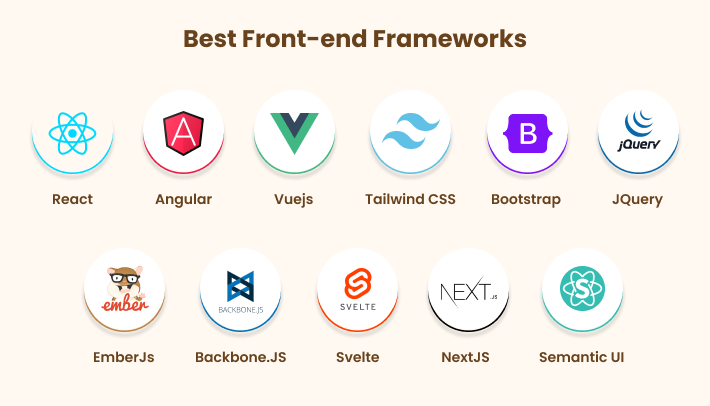
In today’s fast-evolving digital landscape, users expect websites to be fast, interactive, and visually appealing. To meet these expectations, developers rely on powerful frontend frameworks that simplify building complex user interfaces while maintaining high performance.
Choosing the right frontend framework can make a huge difference in development speed, scalability, and user experience. Whether you’re a startup or an enterprise, the right tech stack defines how well your website performs, loads, and scales.
In this guide, we’ll explore the best frontend frameworks for building modern websites in 2025 — along with their strengths, use cases, and why they matter.
React.js, developed by Facebook, is by far the most popular frontend library in the world. It’s not a full framework, but its ecosystem is so extensive that most developers treat it like one.
Examples: Facebook, Instagram, Netflix, and Airbnb all use React.
Next.js, built on top of React, takes performance and SEO to the next level. It’s one of the most popular frameworks for building production-ready, full-stack web applications.
Examples: Hulu, TikTok, and Notion use Next.js for its performance and flexibility.
Vue.js combines the best of React and Angular while maintaining simplicity. It’s known for being lightweight, easy to learn, and incredibly flexible.
Examples: Alibaba, Xiaomi, and GitLab rely on Vue for its flexibility and ease of integration.
Developed and maintained by Google, Angular is a complete, TypeScript-based framework built for large, complex applications.
Examples: Google Cloud, Microsoft Office Web, and Forbes use Angular for scalability and structure.
Svelte is one of the newest players but rapidly gaining traction. Unlike other frameworks, it compiles code at build time — meaning no virtual DOM, no runtime overhead, and blazing-fast performance.
Examples: The New York Times and Spotify have used Svelte in production for fast-rendering pages.
Astro is a relatively new framework designed for content-focused, fast, and SEO-friendly websites. It supports multiple frontend frameworks like React, Vue, and Svelte — all in the same project.
Examples: Google Chrome’s documentation and Firebase use Astro for their content sites.
Qwik is an innovative, performance-focused framework designed for instant loading. It uses resumability, which allows pages to load instantly even after long periods of inactivity.
The “best” frontend framework depends on your team’s skillset, project goals, and scalability needs:
| Project Type | Recommended Framework |
|---|---|
| Small landing pages | Astro, Svelte |
| SEO-focused websites | Next.js, Astro |
| Enterprise web apps | Angular |
| Interactive dashboards | React, Vue |
| Startups or MVPs | Svelte, Next.js |
At The Tech Legends, we use a combination of React, Next.js, and Vue.js to craft fast, secure, and scalable websites for global businesses. Each project is unique — so we choose the framework that best aligns with performance, budget, and growth goals.
Frontend frameworks have revolutionized how we build modern websites. With tools like React, Next.js, and Vue.js, developers can create highly performant, responsive, and visually stunning experiences that scale effortlessly.
The key to success lies not just in choosing the most popular framework, but in selecting the one that aligns best with your project’s long-term vision and scalability needs.
If you’re looking to build a modern, scalable web solution, The Tech Legends can help you choose the right tech stack — and build it the right way.
View all